SwipeEd × The Equal Lens · 2026, ongoing
69 small games that teach what schools skip
I built it solo in 11 days, with an NGO partner. 33,713 scenarios, ages 3 to parenthood, live right now.
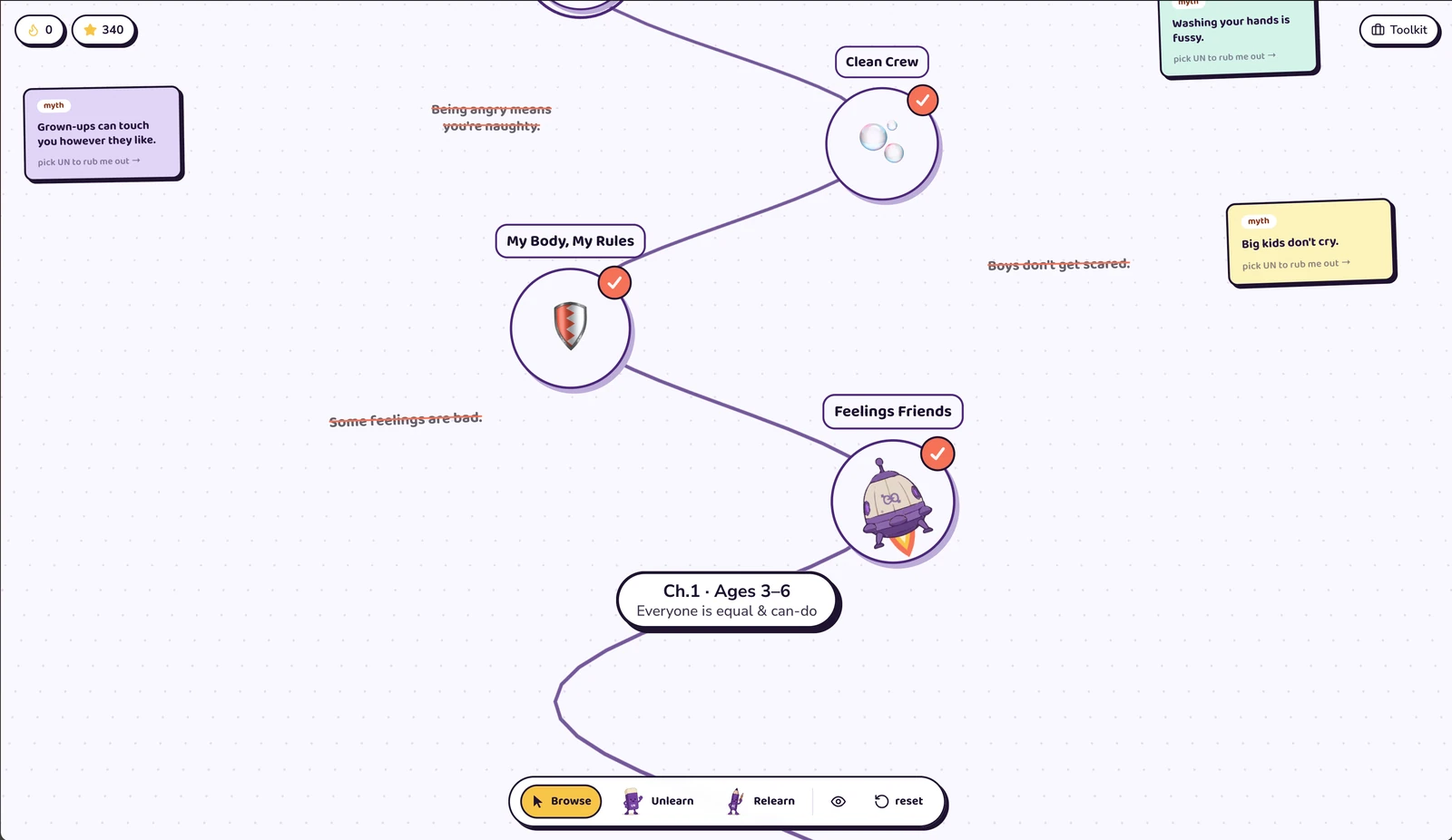
SwipeEd is a learning path of warm, no-fail games about feelings, bodies, relationships, gender, rights and digital life, built with The Equal Lens, an NGO that teaches kids gender equality. The whole path follows one arc: Unlearn, Relearn, Grow.
The reel
They needed two people. I turned out to be both.
I had just left my job and was not looking for another one. Then the founder of The Equal Lens posted a reel looking for founding members, and it sounded like a fun way to contribute to a cause I care about, so I sent my resume. They were looking for two people: someone to design their game and a developer to build it. The game on this page did not exist before that reel, and neither did the brand, the website, or the pitch deck. Being a founding member meant building all of it.
The problem
I got sex education at school. In India, that is rare.
I assumed everyone got it. In college I learned how rare it is in India, and five years ago my thesis on the topic stalled when school gatekeeping killed my surveys. Access has barely moved since; what moved is where the questions go. Kids used to ask Google, now they ask AI chatbots, and that only raises the bar for real education and critical thinking. The Equal Lens teaches through in person workshops. If a game can match the engagement of a workshop, the mission scales across the country instead of across a classroom.
A workshop reaches one room at a time. Tech has no such limit.
The game
How you play is what you learn
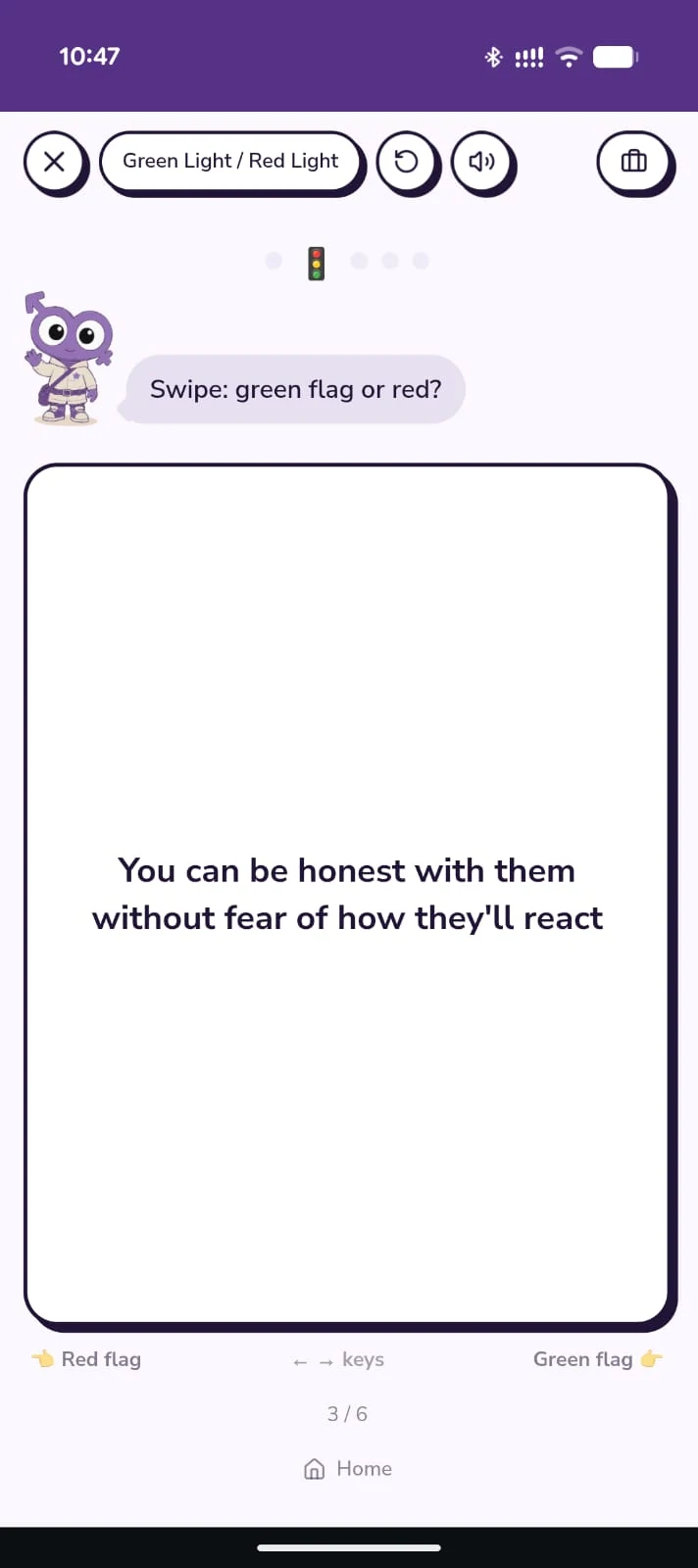
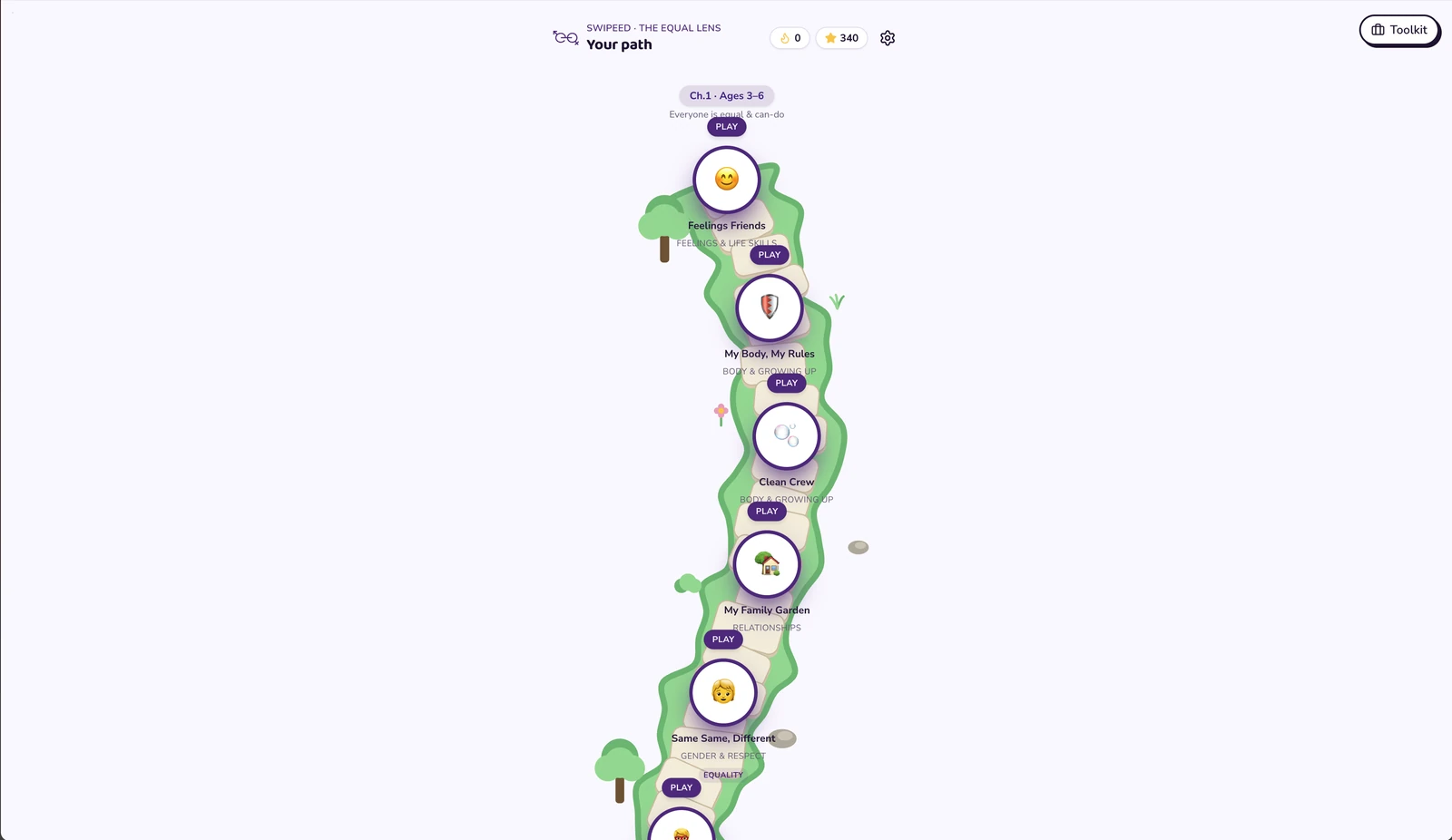
You do not answer questions about consent. You rewrite the myth, you catch the red flags, you say the line. One winding path carries 69 games across 8 age chapters, and every game sits on its own bank of four hundred plus scenarios drawn from real life in India. The loop closes across a generation: the child who starts at My Body, My Rules becomes the parent who teaches The Talks. The same arc runs the NGO’s whole identity at theequallens.com, which I built end to end; one toggle flips the entire design between kid and adult.
The live app, running right here. Play it in the frame, or open it full screen.
The refusal
No scores. No failure. No leaderboard.
Everything in education tech says add points, streaks and leaderboards. We refused the whole kit, and nobody on the team argued. Everyone has biases and everyone is learning; these games only work when the drive is internal, to learn, to understand, to change. Then the law agreed with us. India’s data protection law, the DPDP Act, prohibits tracking and behavioural monitoring of children, and scores and streaks run on exactly that data. An instinct from my thesis became a legal line five years later.
A leaderboard tells a child the point is to win.
The safety checks
33,713 scenarios cannot be checked by hand
The first thing the AI gave me was not scary, it was thin: left to its defaults it produced the bare minimum. The scary part was the arithmetic. 33,713 scenarios for children and families, and every one is a chance for AI to make something up. I had just spent a year building agentic AI for healthcare, so I brought that discipline with me. Code checks everything code can check: that every helpline number matches a verified list, that every scenario stays inside its age band, that the structure is valid. Only the judgment calls that need actual reading go to a second AI, an adversarial reviewer that never shares context with the AI that wrote the scenario. Zero scenarios have shipped with their answers flipped.
Anything code can prove, code proves.
What we scrapped
Two versions died in playtesting
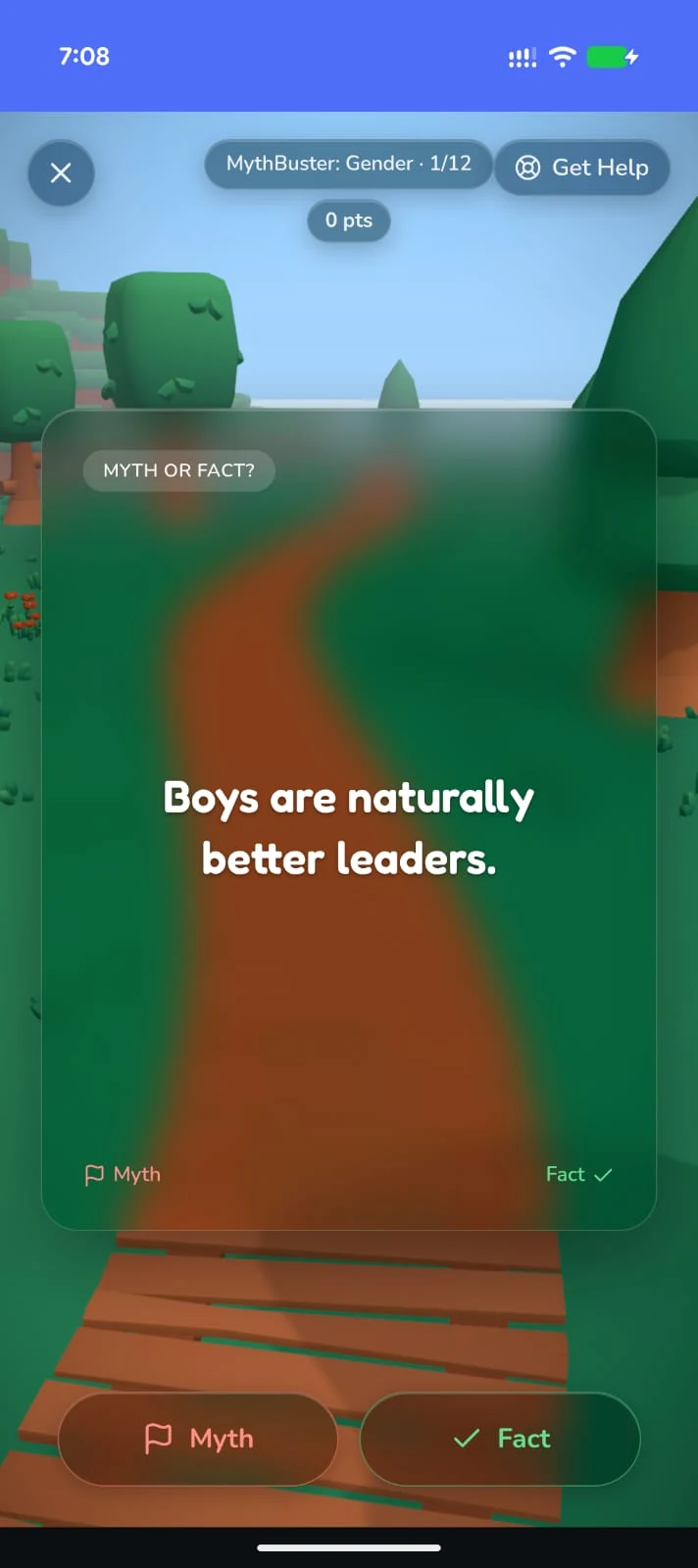
Both calls came from playing, not from metrics. A thin version died when we caught ourselves replaying the same game out of habit; that was the tell that its games all played the same. The 3D version hurt more. It was fully built, with its own world, assets, avatars and a design system, and it still felt forced next to the topic. That world sits on the shelf, waiting for games that fit it better.
The rollout
Not in classrooms yet, on purpose
Our first workshops went to underserved communities, where devices are scarce and a person in the room is worth more than a link. The game covers the other side: schools, and kids who do have phones and computers. Next come partnerships with schools and larger NGOs, and the games in regional languages.
Measurement
Does it work? We do not know yet.
I would rather say that than invent a metric. So far the players are mostly us and our friends; we read the feedback and watch who comes back. Counting visits is allowed, profiling children is not. The real answer needs a proper study, and that study is planned as my masters thesis, after an ethics review.
The research agenda: Scholar
The receipt
The entire bill
69 games, 33,713 scenarios, 8 age chapters. 11 days of development, 3 iterations in. It runs on free hosting and costs nothing to keep alive. The build ran on 11 days of a Claude Max subscription. That is the entire bill.
Closing
If this works
Two things become true. We will have a repeatable model: small games that teach the topics people won’t talk about, and there is a long list of topics waiting behind this one. And the next generation of adults will not have to say the sentence I kept hearing in college: we were never taught this.